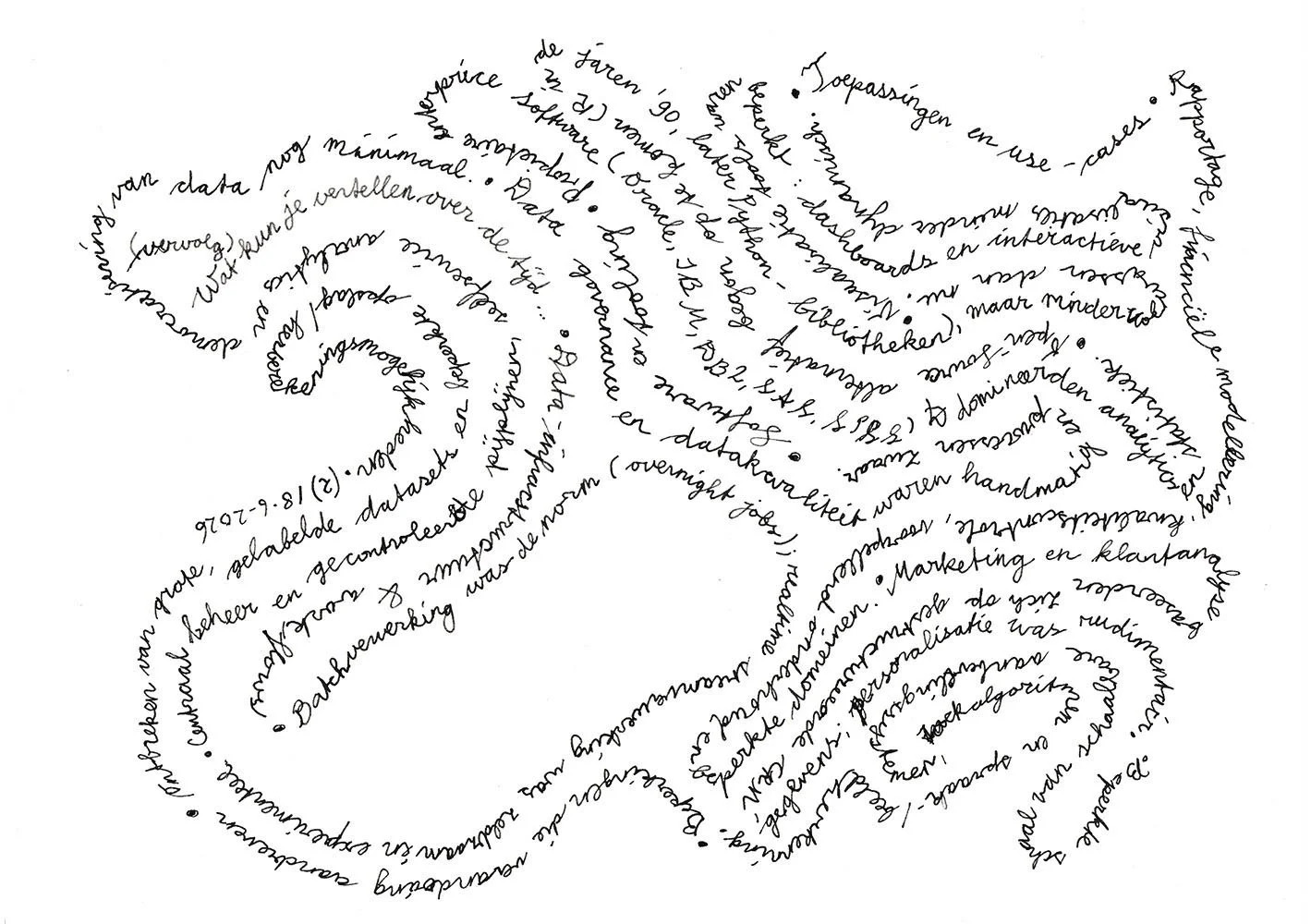
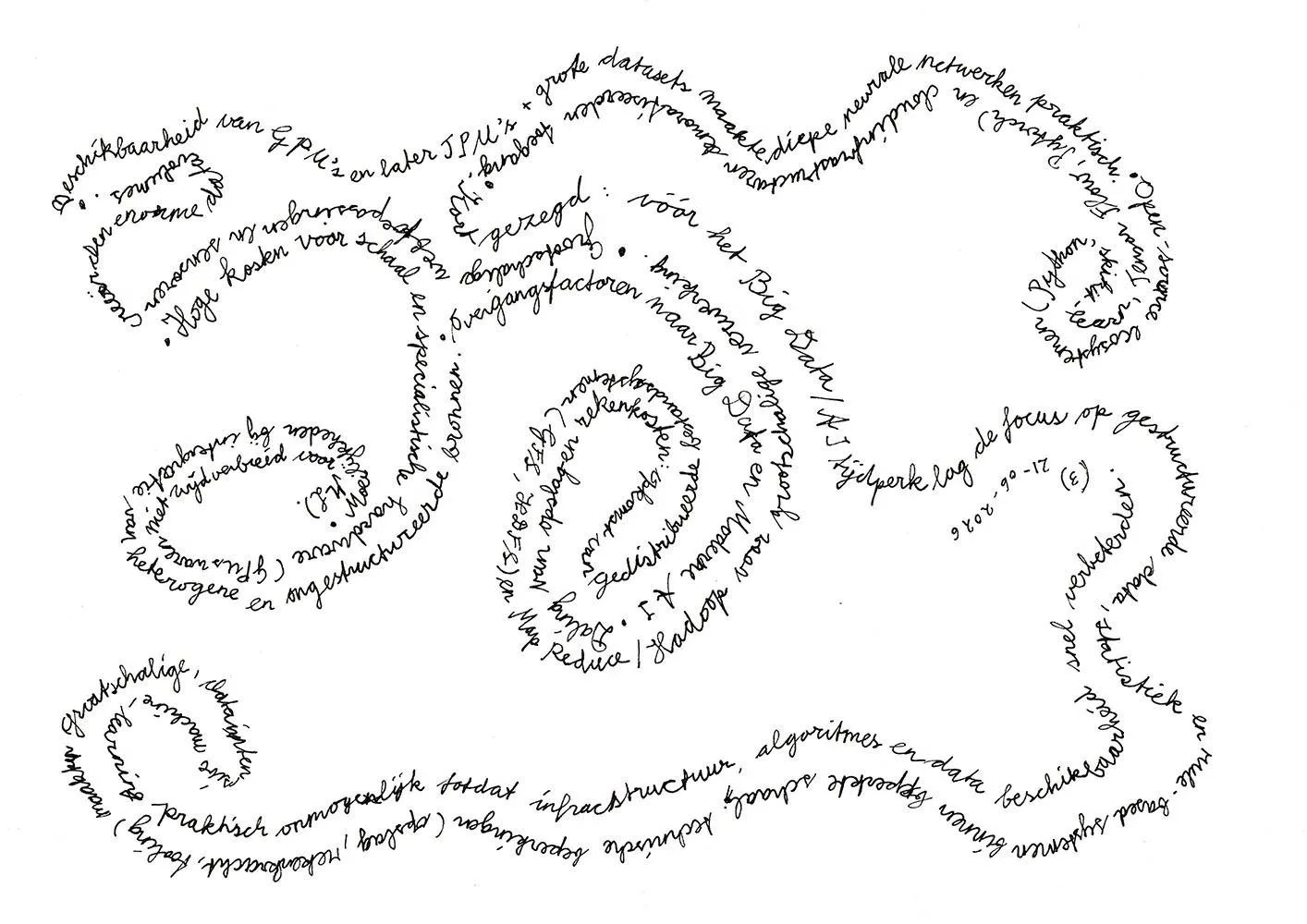
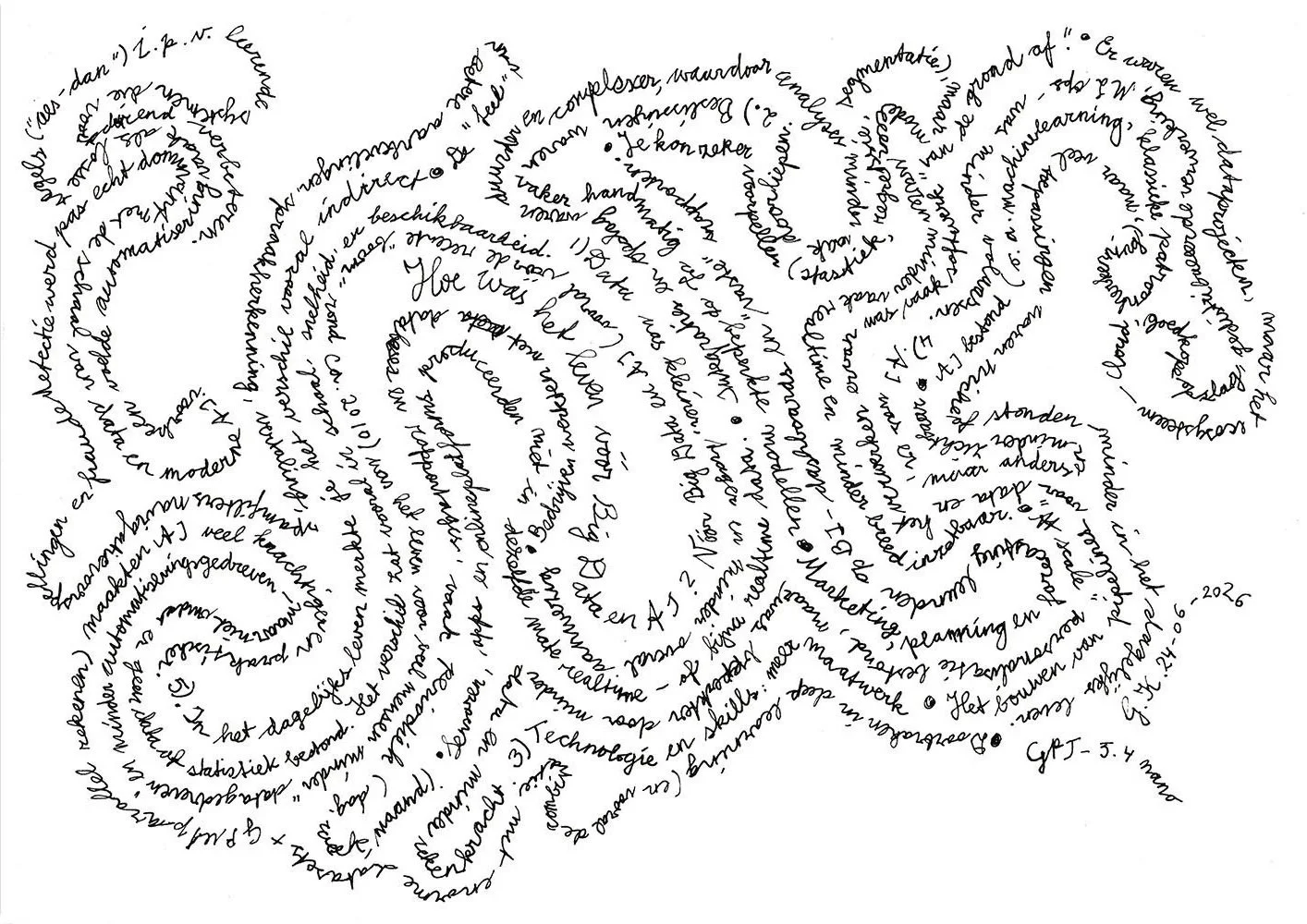
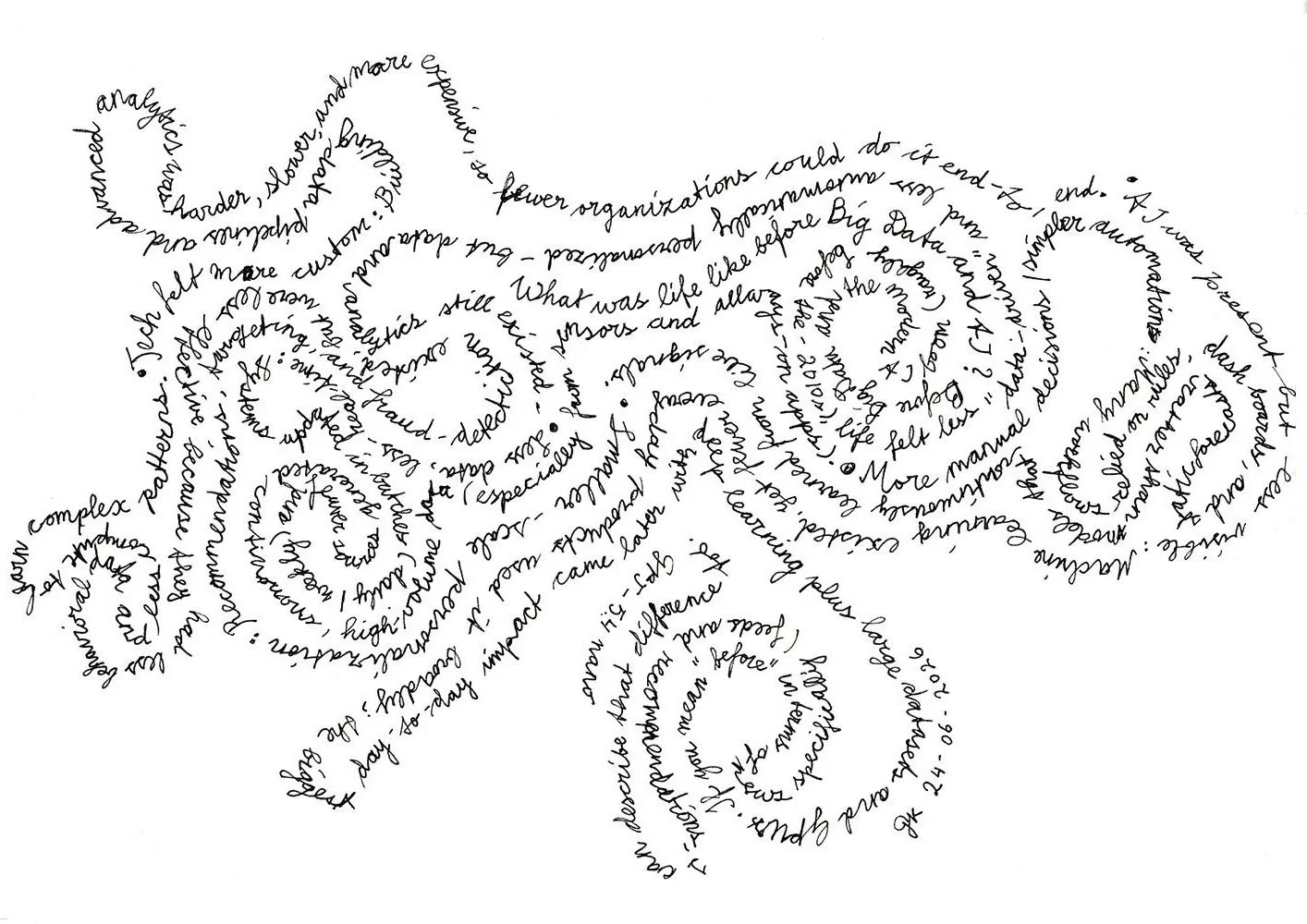
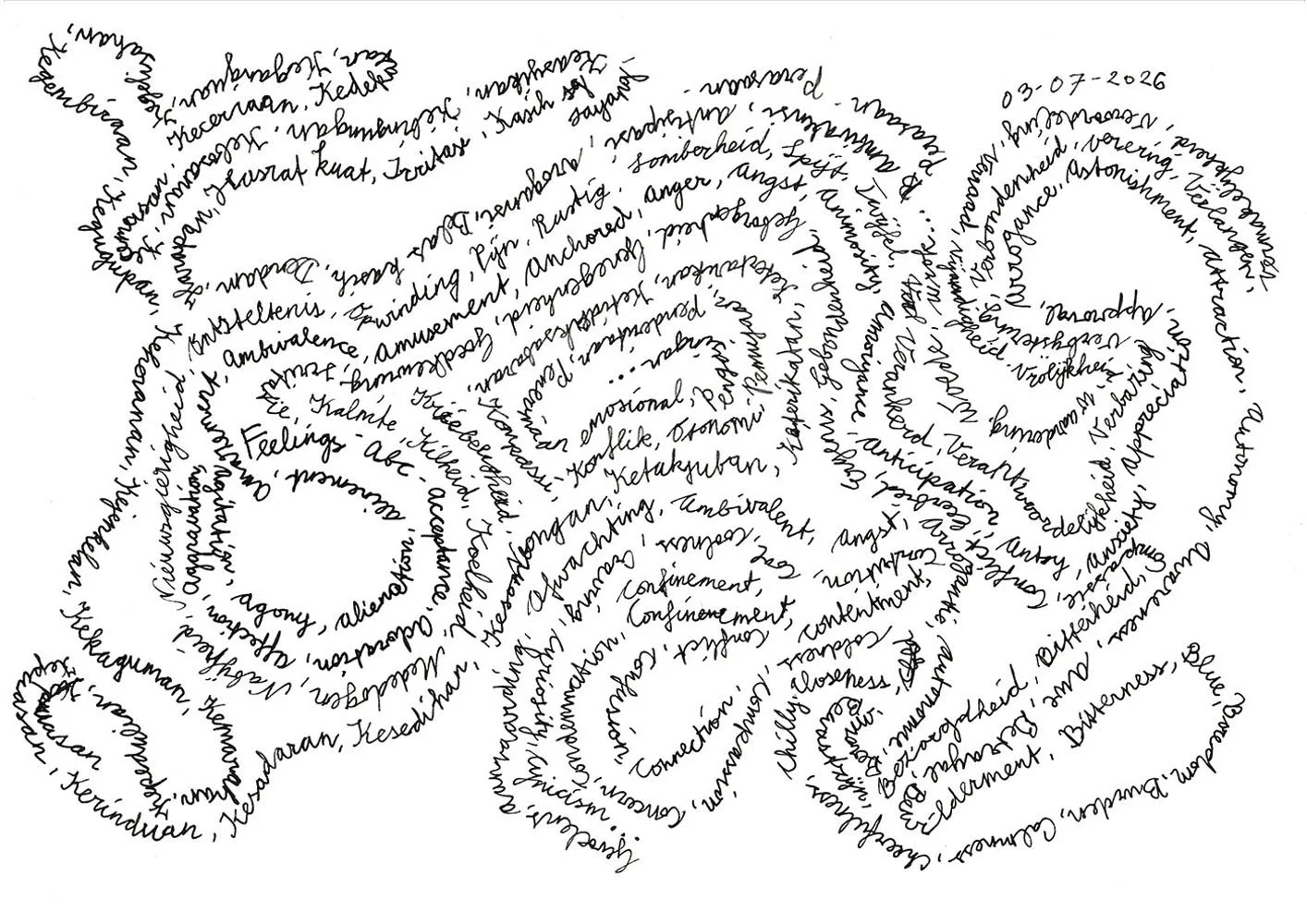
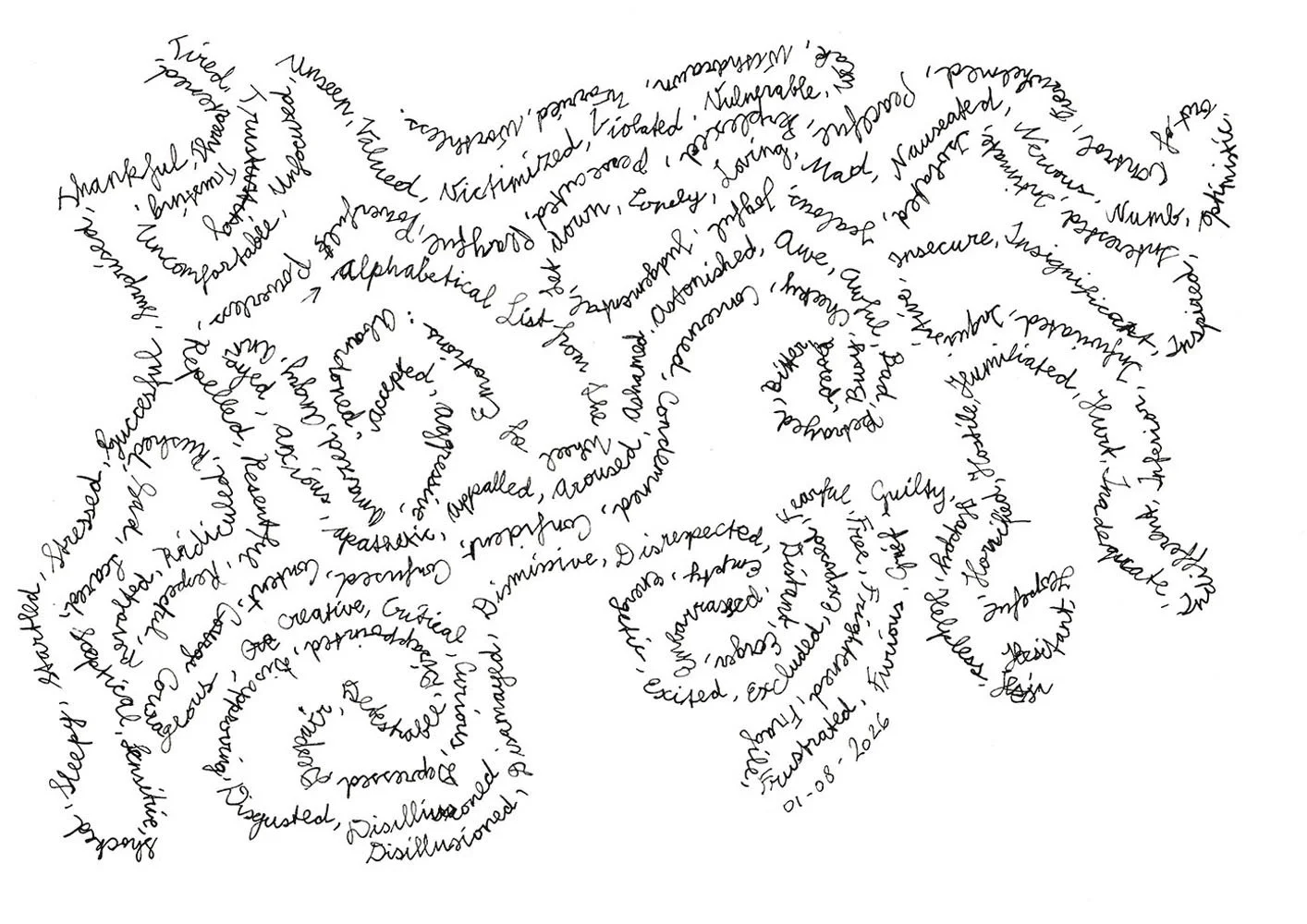
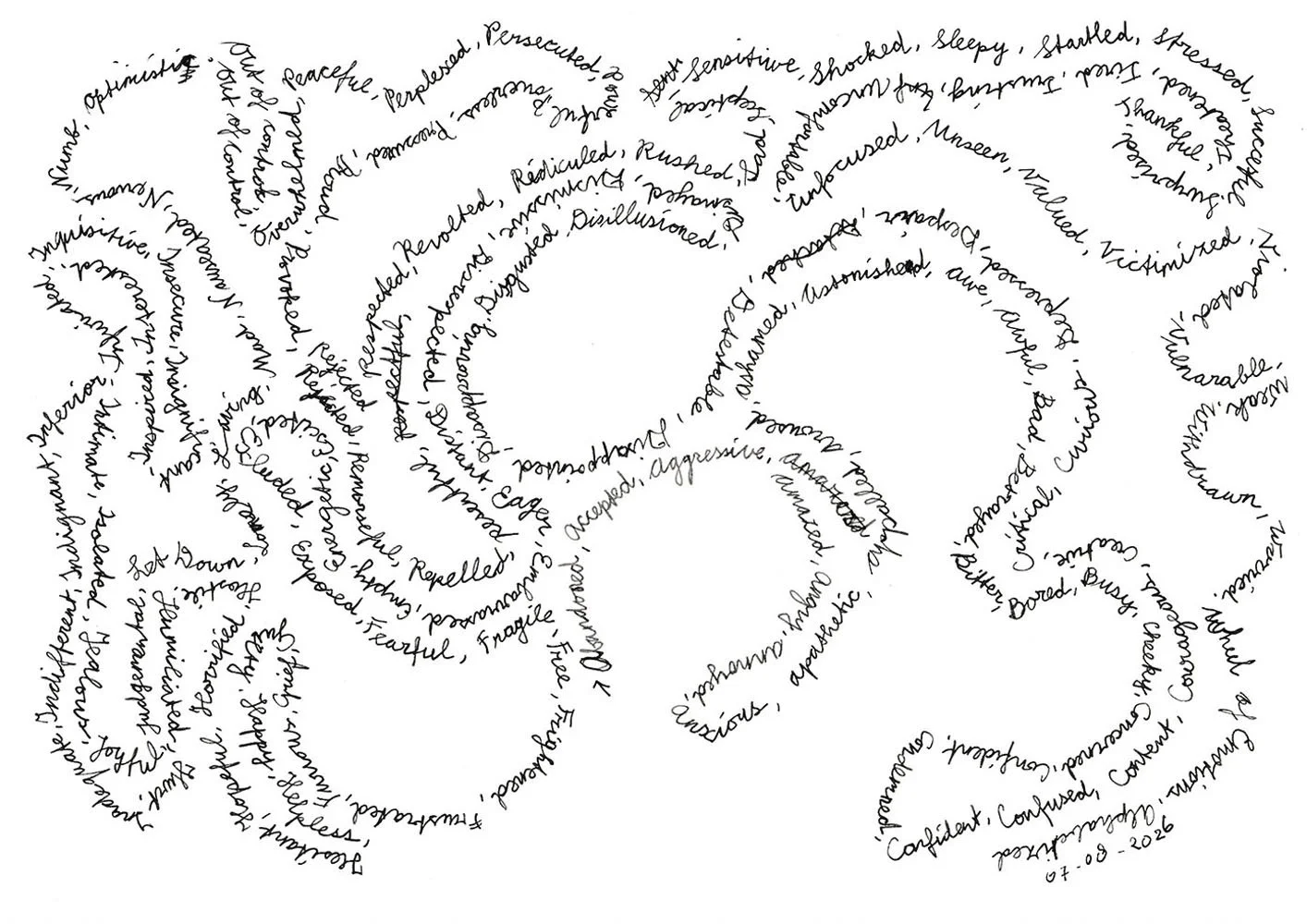
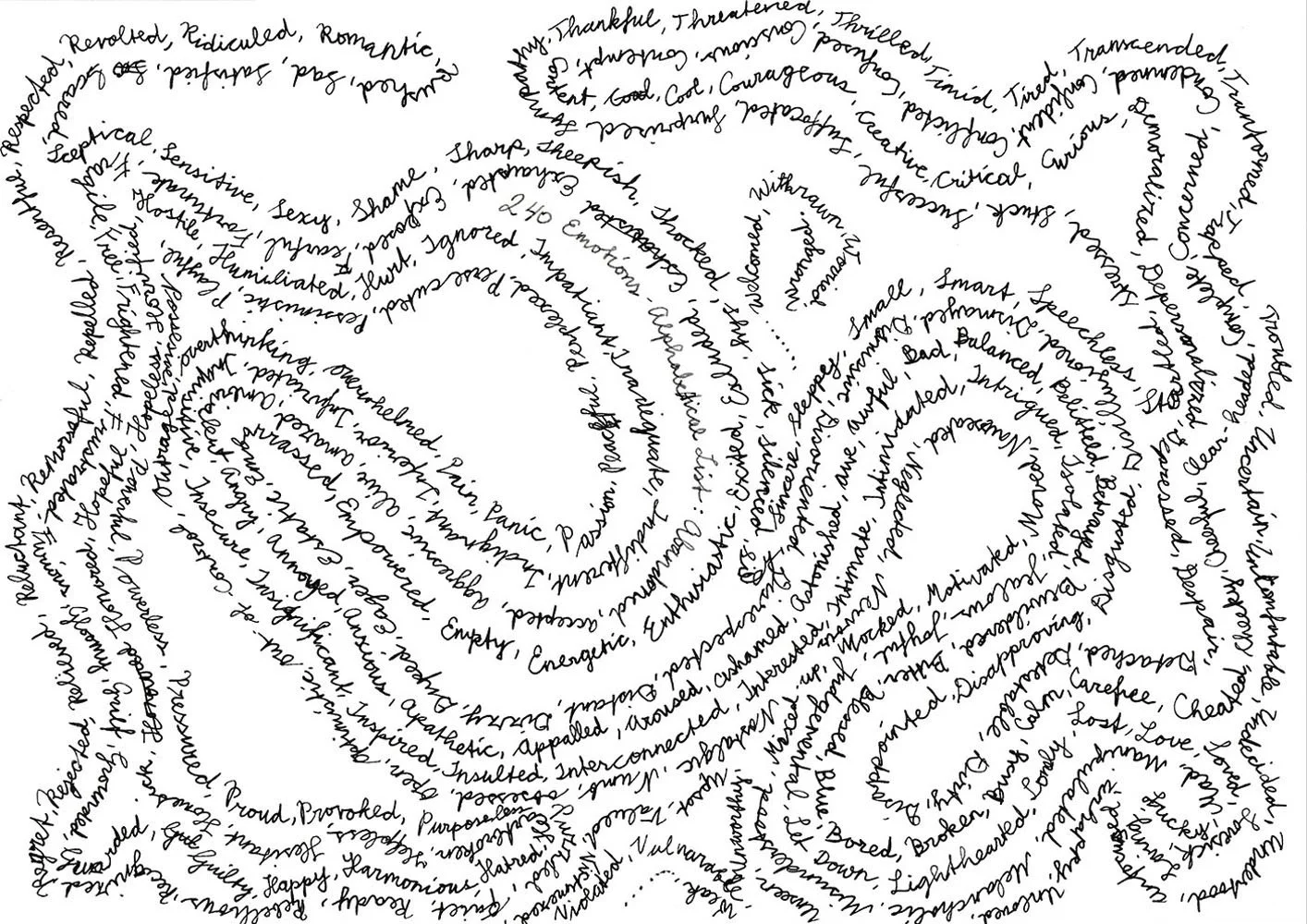
What Was Life Like Before Big Data and AI? 24-0602026 / A4, ink on paper
Since spring 2026 I have been making writing-drawings, because I want to work what I thought, read and found directly into my images. I hold ‘conversations’ via AI, usually through Duck, Lumo or Loes.ai, and write the questions and answers down by hand. Questions such as: What can you tell me about the time before Big Data and AI? How much energy does it cost to answer a complex question? And, as a counterpoint: Can you give me an alphabetical list of all human feelings? With that last one, AI did not quite manage and put other things on the list. Only when you indicate that it may use categories — that is, that it can work from existing psychological theories or sources — does a workable list come out.
It is an attempt to connect high-tech with old-fashioned writing with a fountain pen — something that physically gives you a dead arm, and which therefore offers enough delay to reflect on the developments and the times.
NL
Sinds voorjaar 2026 maak ik schrijftekeningen, omdat ik wat ik dacht, las en vond direct in mijn beelden wil verwerken. Ik voer ‘gesprekken’ via AI, meestal via Duck, Lumo of Loes.ai, en schrijf de vragen en antwoorden met de hand op. Vragen zoals: Wat kun je vertellen over de tijd vóór Big Data en AI? Hoeveel energie kost het beantwoorden van een complexe vraag? En, als tegenhanger: Kun je me een alfabetische lijst geven van alle menselijke gevoelens? Met dat laatste kwam AI er niet helemaal uit en plaatste het andere zaken op de lijst. Pas als je aangeeft dat het categorieën mag gebruiken — dus dat het uit bestaande psychologische theorieën of bronnen kan putten — komt er een werkbare lijst uit.
Het is een poging om hightech met ouderwets schrijven met een vulpen te verbinden — iets waar je fysiek een lamme arm van krijgt, en dat daardoor genoeg vertraging biedt om te reflecteren op de ontwikkelingen en de tijd.